Another string to the wonderful bow of Ian McEwan
May 29, 2010 at 12:23 pm | Posted in Great for Book Clubs, Literary Fiction | 1 Comment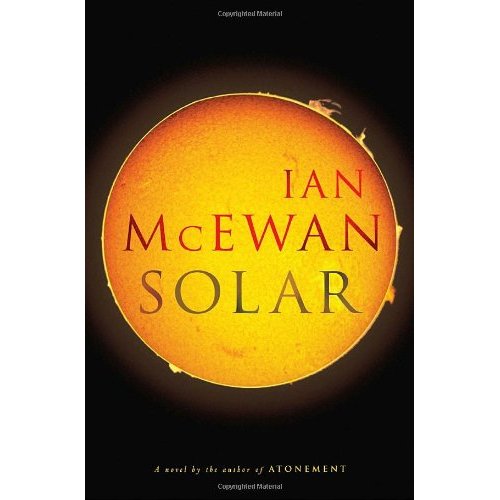 Ian McEwan ‘Solar’ Jonathan Cape, May 2010
A Nobel Prize winning physicist is living on the legacy of his achievements long after they have been achieved. McEwan’s disagreeable protagonist of his latest novel ‘Solar’, Michael Beard, is a celebrated genius of his time. In his youth he invented the Beard-Einstein conflation delving deeper into the world of experimental physics than any scientist before him. He lives happily off the royalties of this work lending his name to institutions and commanding outrageous fees for speaking at conferences. The problem for Beard is that he is getting older, fatter, more disagreeable & philandering and is also finding it difficult not to drink daily. His fifth beautiful wife is about to leave him and for once she is the one having the affair not him. ‘Solar’ could be a typical well written literary novel that meets the high standards we have come to expect from Ian McEwan, but it’s greatest strength is the craft of its storytelling which is a thing of almost perfection.
Beards character is laid out in quite slow detail in the beginning of the story along with the ins and outs of his life. These details of his character are used after the halfway mark in the novel to build the subconscious rhythm and pace of the plot, which is, just as McEwan describes Michael Beards work in the field of physics, genius. For all his achievements Beard in not a moral man and his self centeredness come to be his downfall and the reader has been well informed of all his immoralities from the start.
McEwan elevates Beard at the start of the novel for his intelligence and for maybe being the type of philandering man that is secretly admired by other men. But the higher McEwan puts his leading character is the measure of how far his is going to fall. Beard becomes involved with a young scientist who passionately convinces him to use his body of work to help address the problem of climate change. The science of climate change I must admit also McEwan has also been researched immaculately.
How does the rhythm of the plot make this novel stand out from so many others? It uses fraying friendships, geography and physical conditions to excel the inevitability of Beards downfall. Beard heads to New Mexico to deliver the most important speech of his career to convince high powered conglomerates to invest in solar energy. For all his awareness Beard unrealistically does not see that this is the penultimate moment in his life when all opposing forces in his personal and professional life collide horribly. Throughout his life Beard due to his hectic schedule has had little time for trusted partners, friends, loyal solicitors and women, to use the American expression, he has never been fully in the room with them. Phone calls go unanswered, emails unreturned, meetings cut short, commitments never made.
As the plot spreads out these trusted partners become, through their efforts to get in touch with Beard about important matters, like hunters of Beard. Chasing him over the phone across the Atlantic, sending emails and warnings. It is so clever towards the end of the novel how this climax of disaster is delivered. Trusted allies along with enemies get on trains, buses and planes and work the plot into a boiling pot of revelations. You feel the inevitability of Beards situation without Beard feeling it himself. Time and pressure are built up by characters travelling distances, phone calls increasing and threats and promises looming. Towards the end of the novel Beard has arrived in New Mexico to deliver the most important speech of his career. The physical temperature has greatly increased in the New Mexico sun, Beards health that has been deteriorating and which he has been ignoring is burgeoning into frightening territory with wheezing, coughing, blueish marks appearing on his hands and profuse sweating become like many of the other aspects of his life a thing he can no longer ignore.
We have met scientists in Ian McEwan’s stories before, neurosurgery in ‘Saturday’ and molecular biology in ‘Enduring Love’. We have also met typical alpha male and sexually driven characters in McEwen’s stories. This story bears those hallmarks. Beard’s personal life will stress you out but look at the craftwork of an experienced storyteller with empathetic insights into human failings. Enjoy the compact insight into solar energy and the problems of climate change and maybe agree with me that it is another string to the wonderful bow of Mr Ian McEwan.
Haiku; Will there ever be, a female protagonist, in McEwans books?
We are duplicitous beings capable of magnificant levels of self delusion
May 7, 2010 at 7:52 pm | Posted in Great for Book Clubs, Short Stories | 1 CommentTags: Book Reviews, Short Stories
 Maile Meloy ‘Both Ways Is The Only Way I Want It’ Canongate, April 2010
We are duplicitous beings capable of magnificent levels of self delusion. Whoever thought this could be an affirming idea in fiction? Maile Meloy did…………………..
In Maile Meloy’s collection of short stories ‘Both Ways Is The Only Way I Want It’ there is solid and deep storytelling. Many of the books reviewed on this site have that so how can this book be different? Because boy, is this a clever book. Its title ‘Both Ways Is The Only Way I Want It’ is the common thread that underscores each story making the most different of characters have a universe in common.
No matter how morally out of control a situation, or event, in Maile’s stories gets, the basic premise they all share is that although the two ways a character wants a situation to go are impossible, they all share the same strong desire to have it both ways.
An unfaithful husband on the inevitable cusp of being caught red-handed still convinces himself he can get away with his duplicity if he just behaves obsessively like normal. Two warring brothers forced on a family holiday by their wives ends invariably in disaster but with each of the brothers wishing to repeat the holiday again the next year in the deluded belief it will be different!
Delusion, duplicity and grandiose self deception confirm happily in these stories that we are human and it is ok to want the irrational…especially as the rational side of ourselves knows it is never going to happen! It is fascinating reading! The stories are full of such normal people, people out of work, people on holidays, children, hitchhikers, teenagers and pets. The normality makes the characters and their desires very easily conceivable.
It is the human truth and desire that Maile carves out that is so clever and frightening. No matter how unreasonable your expectations or deluded beliefs, it is explainable by the condition we all suffer of being human. The collection is well balanced, with poignant, tender and melancholy stories and some very funny ones too. In the stories power changes hands like a game of tennis and you also won’t judge any of the characters for their very poor decisions because if you do you will be judging yourself.
For a few days after finishing the book I was left with the image from one story of a child who wanted a puppy so badly, but was allergic to dogs. She brought one home covering her face and throat with a bandana and with socks on her hands to prevent a violent allergic reaction happily thinking she could live the rest of her life like this! Maile’s affirmation that we are capable of capable of the most grandiose of self delusion is one of the strongest affirmations of what it is to be human and feel alive…….want the irrational….believe with all your might it can happen….while all the time knowing it never will!
Haiku; Short stories distill, the absurdity of life, novels dance around.
We shall see each other by our mind’s eye
May 4, 2010 at 7:59 pm | Posted in Literary Fiction | Leave a comment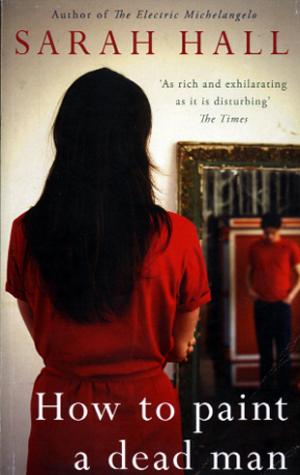 Sarah Hall ‘How To Paint a Dead Man’, Faber, April 2010
What kind of reader are you? Do you skim through prose looking for the narrative in a book, do you find a happy balance between the two or maybe you like both at different times? ‘How To Paint a Dead Man’ may make you want to re-identify what type of reader you are for a few reasons…
In her novel ‘How To Paint a Dead Man’ Sarah Hall is an author in the traditional sense. An author of traditional long passages of poetic prose. However the complexity of how the story is crafted shows her as an author in the modern sense. Four very different characters, with slight connections, guide Sarah’s prose on the idea of art and death. In the 1960’s Umbria, Italy, a much celebrated still life painter is dying and is seeing ever more life in his art. In a neighbouring village a girl is going slowly blind and is developing strong inner vision. In contemporary Britain a bohemian landscape artist is struggling with middle age and his daughter, a museum curator, is embarking on an affair of reckless sexual abandon in order to cope with the death of her twin brother from a drug fuelled bicycle ride. The contemporary characters struggle to find an inner vision and establish a position on art and death which is the novels central tenant.
Sarah’s first novel ‘The Electric Michelangelo’ was shortlisted for the Man Booker Prize and her third novel ‘The Carhullen Army’ won the John Llewellyn Rhys Prize. This latest novel is resplendent. I just love her literary style with long passages of poetic prose, meditations on very tangible ideas of art, death, fragile and delicate human emotions. The lonely and the outgoing work together in a novel where identity and dislocation flirt with grief and sex.
It is a very interesting novel in that Sarah cannot, in my opinion , be pegged as a certain type of author by her style just as opposing ideas and characters are used to evoke some of the most ripe prose on themes common to us all; life, death, art, relationships and identity.
It is undeniable to say that the story becomes overshadowed by sentences and prose but it is nothing to ruminate over. I could have continued reading this novel’s prose for another week. I loved seeing life itself in the still life paintings of bottles by the dying artist ‘which footprints in the dust lead to the real bottles and which lead towards duplicity’ and basked in Sarah’s sentences in description of the dying artist ‘ He smelled of smoke, like a bonfire in autumn, and he was wise and kind. ‘Remember’ he told her, ‘when there is no more hope, we shall see each other by our mind’s eye.’
Haiku; Prose reveals the art, of how to paint a dead man, reveal more Sarah.
Create a free website or blog at WordPress.com.
Entries and comments feeds.
 Sarah's Books