Where isolation is beautiful and death delivers transparency…..
August 3, 2010 at 7:30 pm | Posted in Award Nominated, Great for Book Clubs, Literary Fiction | 1 Comment‘Chef’, Jaspreet Singh, Bloomsbury March 2010 
The finest fiction takes base human conditions and emotions, chips and sculpts away to reveal what is fine in them. What does this mean? The finest authors, I believe, take the most common emotions known to us all such as guilt, love, hate, boredom, patience and commitment and elevate them by using a story to reveal how uncommon these experiences actually are to us and in the case of this novel how desolation can be movingly beautiful. Jaspreet Singh is a very special author who makes these common human emotions, we all experience in one form or another, into a shared experience through this story that is sharp like a razor.
‘Chef’ is a novel full of grace and powerful storytelling. A novel where isolation becomes beautiful in its description and in its place in the story both emotionally and geographically. A novel in which death delivers transparency on a life chastened by guilt and moulded by circumstances. How does Jaspreet Singh make this happen? Through sublime storytelling. This is the memory of a life that reveals itself to be a requiem for India and Pakistan.
Kirpal Singh is dying on a train. He is making his way back to a military camp in Kashmir where fourteen years previously he worked as a chef for the General there to cook a final wedding feast for the Generals daughter. He worked in an isolated part of Kashmir flanked by glaciers which are both violently beautiful and physically cruel and become a testament to Kirpal’s own life. He is making sense of his life as he travels on the slow train. He joined the Indian army out of an allegiance to his father who died in the line of duty. During his career Kirpal bears witness to sectarian hatred his life’s story in its own way painting the personalized history of Pakistan and India. He experiences love, learns the art of food and women and experiences relationships that occur outside normal social rhythms.
Duties as a military man are not always easy for Kirpal, carrying out orders he can’t agree with and working with people he doesn’t always understand culminates in Kirpal having to leave Kashmir in a shroud of mystery. Kirpal is a soldier but not of the army he a soldier in his own life. Jasprett Singh’s writing has earned him several awards and nominations, notably ‘Chef’ was long listed for the International IMPAC Dublin Literary Award 2010. Singh has a PHD in chemical engineering and is a former research scientist living in the Canadian Rockies. With this novel Singh has announced himself as a major literary player. This is extraordinary writing.
Haiku; The border between, India and Pakistan, crossed with princely skill.
Only the locust can catch the bird….
July 11, 2010 at 4:22 pm | Posted in Biography | 1 CommentHanan Al Shaykh, ‘The Locust and the Bird’ Bloomsbury, April 2010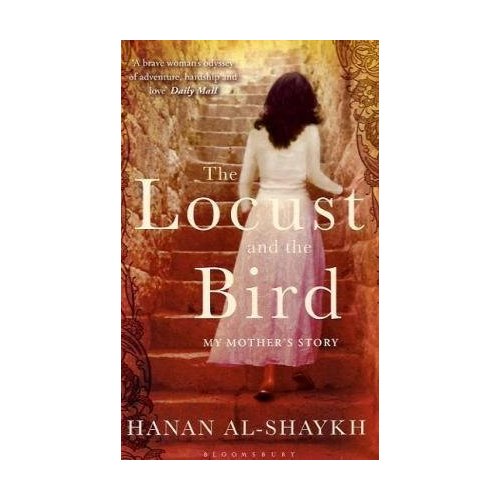
The Locust and the Bird is an interesting story for two reasons. It is the story of a mother documented by her daughter. This is more necessary than you think as the mother, Kamila, is illiterate. It is also an insight into an Islamic woman’s world in 1930’s Lebanon and Beirut as finally understood by her daughter in 2001, remotely both geographically and culturally in New York. It could have easily been different. As autobiographical stories that grow out of stories of suffering and diaspora can be hard to tell. But Hanan Al-Shaykh’s skills as a writer create a tender evocation of her mother’s life story.
Hanan Al-Shaykh is an accomplished writer with four novels and a short story collection already behind her. She explains in the prologue that each time she had a new book published her mother beseeched her daughter to write her life story until finally Hanan agreed.
It is Hanan’s reportage style that sustains this autobiography making it good reading. A poignant story of when Kamila was forced into marriage at the age of thirteen, subjected to brutality by many of the men in her life only to find true love in her later years. Having been denied an education Kamila’s ideas of love are developed through her visits to the cinema and the relationships she sees in the Arab language films in vogue at the time. Hanan paints an evocate portrait of south Lebanon where the mother grew up and balances the dark humanity in her mother’s story with the bustling noise and life of Beirut city.
At times my interest in the story waned I must admit and I believe it was my compulsion to Hanan’s style of writing that kept me turning the pages. There is an eerie sense that this was the right time for Hanan to write her mother’s story after years of her mother pleading. It is appropriate and accomplished of Hanan to use New York of 2001 and modern life to finally interpret her mothers story of 1930’s Lebanon and to make it understandable by a wider audience.
As Hanan mandates at the beginning of writing her mother’s story ; ‘Wails and tales. My life story is one long revelation. Only the locust can capture the bird.’
Haiku; Using the present, to interpret the past, is interesting.
No and Me from Bloomsbury…
June 9, 2010 at 8:03 pm | Posted in Young Adult | 2 Comments Delphine De Vigan, ‘No and Me’, Bloomsbury, May 2010
Lou is a thirteen year old girl living in Paris. She is an exceptional student with an IQ of 160 who is excelling in school. But Lou lives a lonely life with a mother who is suffering with depression and a father who is caught up taking care of her mother. She is a tiny girl, much shorter than her schoolmates who is neglected by her parents and forgotten about by her classmates. Her intelligence however affords her a freedom on a higher level and Delphine De Vigan uses this to narrate a story on homelessness set against the backdrop of one of the most grandiose and beautiful cities in the world-Paris.
Tenderly written, Delphie De Vigan, tackles the issue of homelessness using the voice of Lou. It is a beautiful idea that such a little girl can take on the large problem of homelessness. Lou meets an older homeless girl called No with whom she strikes up a friendship with and eventually No comes to live with Lou and her parents. This book gives the reader philosophical insights into how society can continue to let people live on the streets and Lou’s innocence generates a powerful narrative. De Vigan tackles the issues head on and her language is simple. These two methods lend the novel a strong emotional foundation.
No and Me topped the bestseller charts in France where it was the bookseller choice in 2007. Bloomsbury is publishing it in two editions for adults and for teenagers. I didn’t know beginning the book that it was a crossover novel but it became clear very quickly. It is highly recommendable for young teenagers, a coming of age story and a good introduction to philosophy. An interesting read and a super translation from the original French story.
Haiku; The French tradition, of teaching philosophy to children is here.
Another string to the wonderful bow of Ian McEwan
May 29, 2010 at 12:23 pm | Posted in Great for Book Clubs, Literary Fiction | 1 Comment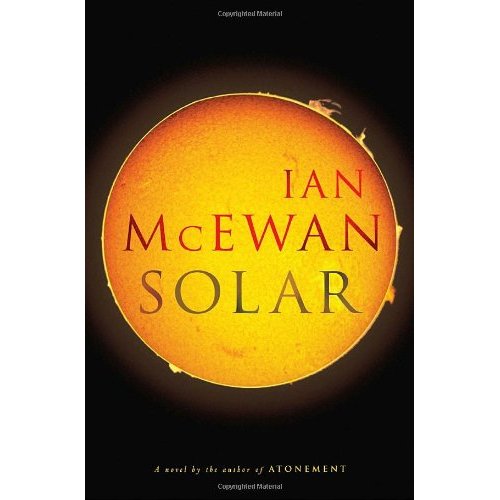 Ian McEwan ‘Solar’ Jonathan Cape, May 2010
A Nobel Prize winning physicist is living on the legacy of his achievements long after they have been achieved. McEwan’s disagreeable protagonist of his latest novel ‘Solar’, Michael Beard, is a celebrated genius of his time. In his youth he invented the Beard-Einstein conflation delving deeper into the world of experimental physics than any scientist before him. He lives happily off the royalties of this work lending his name to institutions and commanding outrageous fees for speaking at conferences. The problem for Beard is that he is getting older, fatter, more disagreeable & philandering and is also finding it difficult not to drink daily. His fifth beautiful wife is about to leave him and for once she is the one having the affair not him. ‘Solar’ could be a typical well written literary novel that meets the high standards we have come to expect from Ian McEwan, but it’s greatest strength is the craft of its storytelling which is a thing of almost perfection.
Beards character is laid out in quite slow detail in the beginning of the story along with the ins and outs of his life. These details of his character are used after the halfway mark in the novel to build the subconscious rhythm and pace of the plot, which is, just as McEwan describes Michael Beards work in the field of physics, genius. For all his achievements Beard in not a moral man and his self centeredness come to be his downfall and the reader has been well informed of all his immoralities from the start.
McEwan elevates Beard at the start of the novel for his intelligence and for maybe being the type of philandering man that is secretly admired by other men. But the higher McEwan puts his leading character is the measure of how far his is going to fall. Beard becomes involved with a young scientist who passionately convinces him to use his body of work to help address the problem of climate change. The science of climate change I must admit also McEwan has also been researched immaculately.
How does the rhythm of the plot make this novel stand out from so many others? It uses fraying friendships, geography and physical conditions to excel the inevitability of Beards downfall. Beard heads to New Mexico to deliver the most important speech of his career to convince high powered conglomerates to invest in solar energy. For all his awareness Beard unrealistically does not see that this is the penultimate moment in his life when all opposing forces in his personal and professional life collide horribly. Throughout his life Beard due to his hectic schedule has had little time for trusted partners, friends, loyal solicitors and women, to use the American expression, he has never been fully in the room with them. Phone calls go unanswered, emails unreturned, meetings cut short, commitments never made.
As the plot spreads out these trusted partners become, through their efforts to get in touch with Beard about important matters, like hunters of Beard. Chasing him over the phone across the Atlantic, sending emails and warnings. It is so clever towards the end of the novel how this climax of disaster is delivered. Trusted allies along with enemies get on trains, buses and planes and work the plot into a boiling pot of revelations. You feel the inevitability of Beards situation without Beard feeling it himself. Time and pressure are built up by characters travelling distances, phone calls increasing and threats and promises looming. Towards the end of the novel Beard has arrived in New Mexico to deliver the most important speech of his career. The physical temperature has greatly increased in the New Mexico sun, Beards health that has been deteriorating and which he has been ignoring is burgeoning into frightening territory with wheezing, coughing, blueish marks appearing on his hands and profuse sweating become like many of the other aspects of his life a thing he can no longer ignore.
We have met scientists in Ian McEwan’s stories before, neurosurgery in ‘Saturday’ and molecular biology in ‘Enduring Love’. We have also met typical alpha male and sexually driven characters in McEwen’s stories. This story bears those hallmarks. Beard’s personal life will stress you out but look at the craftwork of an experienced storyteller with empathetic insights into human failings. Enjoy the compact insight into solar energy and the problems of climate change and maybe agree with me that it is another string to the wonderful bow of Mr Ian McEwan.
Haiku; Will there ever be, a female protagonist, in McEwans books?
We are duplicitous beings capable of magnificant levels of self delusion
May 7, 2010 at 7:52 pm | Posted in Great for Book Clubs, Short Stories | 1 CommentTags: Book Reviews, Short Stories
 Maile Meloy ‘Both Ways Is The Only Way I Want It’ Canongate, April 2010
We are duplicitous beings capable of magnificent levels of self delusion. Whoever thought this could be an affirming idea in fiction? Maile Meloy did…………………..
In Maile Meloy’s collection of short stories ‘Both Ways Is The Only Way I Want It’ there is solid and deep storytelling. Many of the books reviewed on this site have that so how can this book be different? Because boy, is this a clever book. Its title ‘Both Ways Is The Only Way I Want It’ is the common thread that underscores each story making the most different of characters have a universe in common.
No matter how morally out of control a situation, or event, in Maile’s stories gets, the basic premise they all share is that although the two ways a character wants a situation to go are impossible, they all share the same strong desire to have it both ways.
An unfaithful husband on the inevitable cusp of being caught red-handed still convinces himself he can get away with his duplicity if he just behaves obsessively like normal. Two warring brothers forced on a family holiday by their wives ends invariably in disaster but with each of the brothers wishing to repeat the holiday again the next year in the deluded belief it will be different!
Delusion, duplicity and grandiose self deception confirm happily in these stories that we are human and it is ok to want the irrational…especially as the rational side of ourselves knows it is never going to happen! It is fascinating reading! The stories are full of such normal people, people out of work, people on holidays, children, hitchhikers, teenagers and pets. The normality makes the characters and their desires very easily conceivable.
It is the human truth and desire that Maile carves out that is so clever and frightening. No matter how unreasonable your expectations or deluded beliefs, it is explainable by the condition we all suffer of being human. The collection is well balanced, with poignant, tender and melancholy stories and some very funny ones too. In the stories power changes hands like a game of tennis and you also won’t judge any of the characters for their very poor decisions because if you do you will be judging yourself.
For a few days after finishing the book I was left with the image from one story of a child who wanted a puppy so badly, but was allergic to dogs. She brought one home covering her face and throat with a bandana and with socks on her hands to prevent a violent allergic reaction happily thinking she could live the rest of her life like this! Maile’s affirmation that we are capable of capable of the most grandiose of self delusion is one of the strongest affirmations of what it is to be human and feel alive…….want the irrational….believe with all your might it can happen….while all the time knowing it never will!
Haiku; Short stories distill, the absurdity of life, novels dance around.
We shall see each other by our mind’s eye
May 4, 2010 at 7:59 pm | Posted in Literary Fiction | Leave a comment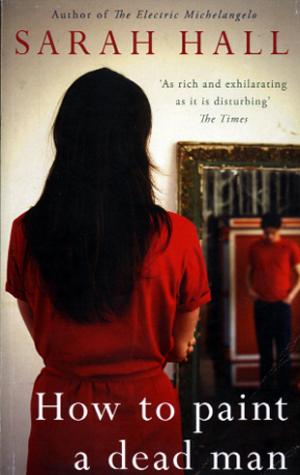 Sarah Hall ‘How To Paint a Dead Man’, Faber, April 2010
What kind of reader are you? Do you skim through prose looking for the narrative in a book, do you find a happy balance between the two or maybe you like both at different times? ‘How To Paint a Dead Man’ may make you want to re-identify what type of reader you are for a few reasons…
In her novel ‘How To Paint a Dead Man’ Sarah Hall is an author in the traditional sense. An author of traditional long passages of poetic prose. However the complexity of how the story is crafted shows her as an author in the modern sense. Four very different characters, with slight connections, guide Sarah’s prose on the idea of art and death. In the 1960’s Umbria, Italy, a much celebrated still life painter is dying and is seeing ever more life in his art. In a neighbouring village a girl is going slowly blind and is developing strong inner vision. In contemporary Britain a bohemian landscape artist is struggling with middle age and his daughter, a museum curator, is embarking on an affair of reckless sexual abandon in order to cope with the death of her twin brother from a drug fuelled bicycle ride. The contemporary characters struggle to find an inner vision and establish a position on art and death which is the novels central tenant.
Sarah’s first novel ‘The Electric Michelangelo’ was shortlisted for the Man Booker Prize and her third novel ‘The Carhullen Army’ won the John Llewellyn Rhys Prize. This latest novel is resplendent. I just love her literary style with long passages of poetic prose, meditations on very tangible ideas of art, death, fragile and delicate human emotions. The lonely and the outgoing work together in a novel where identity and dislocation flirt with grief and sex.
It is a very interesting novel in that Sarah cannot, in my opinion , be pegged as a certain type of author by her style just as opposing ideas and characters are used to evoke some of the most ripe prose on themes common to us all; life, death, art, relationships and identity.
It is undeniable to say that the story becomes overshadowed by sentences and prose but it is nothing to ruminate over. I could have continued reading this novel’s prose for another week. I loved seeing life itself in the still life paintings of bottles by the dying artist ‘which footprints in the dust lead to the real bottles and which lead towards duplicity’ and basked in Sarah’s sentences in description of the dying artist ‘ He smelled of smoke, like a bonfire in autumn, and he was wise and kind. ‘Remember’ he told her, ‘when there is no more hope, we shall see each other by our mind’s eye.’
Haiku; Prose reveals the art, of how to paint a dead man, reveal more Sarah.
The harder I looked, the more I saw……..
April 20, 2010 at 6:53 pm | Posted in Literary Fiction | 1 Comment ‘Point Omega’ Don DeLillo, Picador, March 2010
I read a review of Don DeLillo’s latest book, ‘Point Omega’, where it simply said ‘This is literature’ and how apt it is. ‘Point Omega’ will remind you what polished literature can comprise of. Contained within two chapters and four characters is world that the reader has to look closely at to see but is richly rewarded when they do.
‘Point Omega’ opens with a man watching the ‘Psycho’ movie as an art installation slowed down to a twenty four hour running period and ‘the less there was to see, the harder he looked, the more he saw’. This idea runs through the book. A film maker, Jim Finley, has visited Richard Elster, a former Defence Department Advisor in order to make a film about Elster’s time with the Department during the second Iraq war but Elster is reluctant to talk. The visit to Elster’s home, somewhere in the desert near San Diego, becomes distended and a powerful story is brought about by Elster’s little disclosure. Sounds strange but it works.
The man watching the psycho installation, at the beginning of the book, carefully watches the people around him’s reactions to the violence on the screen. This juxtaposition offers the reader an understanding to Elster’s reluctant disclosure on the Iraq war. The book takes a more emotional turn when Elster’s daughter Jessie visits her father during Finlay’s stay, to whom Finlay becomes attracted, becoming a little like the equivalent of Psycho’s Janet Leigh. It could be argued that the novel turns into a thriller in the second chapter with the disappearance of Jessie but to no real detriment to the novel a whole. The realizations of the characters are mirrored in the art installation of the Psycho film which I think distinguishes this novel from so many others on bookshelves out there. Don DeLillo gets to the heart of matters very quickly with his sparse language. This novel deserves a few readings as it is very intricate, just like the opening line the harder you look the more you will see…..
Haiku; Disclosure and art, DeLillo is the master, reader look closely.
The author who disappeared
April 12, 2010 at 8:12 pm | Posted in Award Nominated, Great for Book Clubs, Middle Weight Fiction | 1 Comment Clare Morrall ‘The Man Who Disappeared’ Sceptre, February 2010
In February 2003 I was blown away by Clare Morrall’s breakthrough novel ‘Astonishing Splashes of Colour’. It was a superbly crafted, subtle novel. It told the story of Kitty, a diminutive woman, who lives with a condition called synaesthesia through which she sees her emotions in colour. The mysteries of Kitty’s life, in this wonderful novel, explode in what the author was adept to rightly call astonishing splashes of colour. Seven years on in February 2010 I was sadly underwhelmed by Clare’s latest offering ‘The Man Who Disappeared’. ‘The Man Who Disappeared’ is the story of Felix, a husband who abandons his good middle class family and over the course of an unfortunately mundane plot it is revealed he has disappeared due to his involvement in serious money laundering and is on the run from Interpol. There is nothing to hate or like about any of the characters who are diluted and spread bare over the length of the book. There are none of the simmering emotions Clare is renowned for portraying in her novels, no insights into human behaviour, well used language or wildly escalating scenarios as she has provided for us before. Had this novel been by another author who had not received such critical acclaim I would have enjoyed it for what it is; a good yarn and a well enough structured suspense thriller. But it is Clare Morrall’s legacy that overcasts this novel. Clare Morrall was writing novels for twenty years and had manuscripts rejected by almost every publishing house in Britain before a tiny publisher in Birmingham saw the depth of ‘Astonishing Splashes of Colour’ and published it for the then fifty-two year old author. That year ‘Astonishing Splashes of Colour’ was shortlisted for the Booker prize and Morrall took her place among other literary giants on the shortlist including Margaret Atwood, Monica Ali and D.B.C. Pierre (who went onto win the prize). My admiration for Morall as an author is undiminished as is my admiration for her contribution to literary processes. Unlike Felix the fair-weather husband, I remain loyal, and look foreword to her future writing which I have no doubt will come.
Haiku; Dissapointment comes, in a novel with a red raincoat on the cover.
Sorting out the chaos is beautiful
March 27, 2010 at 1:08 pm | Posted in Literary Fiction | 1 Comment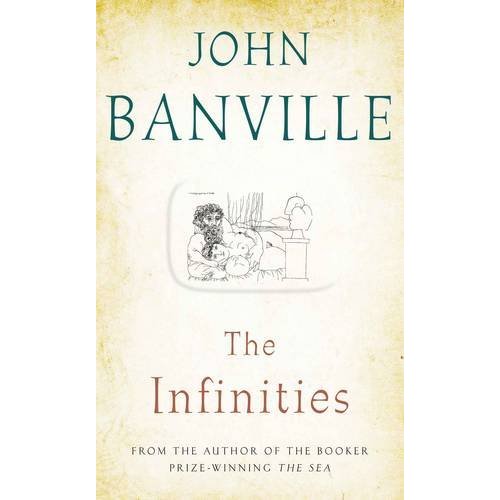 John Banville ‘The Infinities’ Picador, March 2009
Wildly ambitious ideas of physics mixed with heavyweight classical concepts of the gods, a story that takes place within a day grounded with fallible humans….this isn’t fiction a burgeoning author could take only an established literary heavyweight could tackle such subject matter. These are some of the main components of John Banville’s latest novel ‘The Infinites’.
John Banville has been long celebrated as one of Ireland’s literary masters of style. His incredible novel ‘The Book of Evidence’ was shortlisted for the Man Booker Prize in 1989. His novel ‘The Sea’ won the Booker for him in 2005 and also won him the Irish Book Awards Novel of the Year. He has been heavily influenced by James Joyce (which is often seen in his work) and by the playwright Heinrich von Kleist whose play ‘Amphitrion’ he uses as a basis for ‘The Infinites’. He says of himself that he tries to fuse prose and poetry together in his work. Another wise author said to me recently that even the best authors, especially those with a large body of work already behind them, don’t always have something original to say in each novel; does John Banville have something to say with ‘The Infinites’ and does he say it with success? Let’s find out………
In middle Ireland somewhere, in a large gloomy house the Godely family have gathered to be by the bedside of their dying father ‘Old Adam’. ‘Old Adam’s’ first wife has committed suicide, his second wife Ursula is a secret drinker whose teetering on the edge of sanity, his son ‘young Adam’ is an uninspired young man whose wife Helen is a striking beauty and his daughter Petra is an affected young woman controlled by her own nerves and has an ability for self harm. These gritty characters ground us in flawed human life but when Greek gods descend upon them to visit and play, Banville works up a whirlwind of prose with layered meanings of classics and physics. The narrator is Hermes and ‘young Adam’ becomes Zeus who ravishes his wife Helen in the opening scene, doing what ‘young Adam’ would do if he were a little more inspired.
The title ‘The Infinites’ refers to a problem that exists in the quantum field theory which found that specific types of calculations can give infinite results. The main protagonist, the dying ‘Old Adam’ is a brilliant physicist/mathematician, on a power with Einstein, who has solved this problem to infinity and while doing so proving the existence of parallel universes. The world Banville creates for ‘Old Adam’ to die in is otherworldly possibly like one of the parallel universes he has proven the existence of. Banville’s prose meditates on the idea of self identity, our place in the world and in the universe in its infinity which can leave the undiscerning reader feeling a little small. The fragility of the human is in observable in each scene in this novel in the midst of such large enigmatic forces and ideas. As with much lyrical prose writing the pace of this novel is slow, although ‘The Infinites’ has a lot to say sometimes it could be argued that it says it a little too slowly but this is counteracted with a strong narrative voice.
Maths, physics, dimensions of space and time, String Theory, M Theory, parallel universes…it seems of late some of the cutting literature out there is employing physics and prose, together in a beautiful miscellany, in an attempt to bring some order on the disorder that is the human condition and the sorting out of the chaos in such literature is beautiful.
Haiku; Gods and mortal men, to die in another world, means to live again.
If comedy is tragedy…
March 19, 2010 at 7:30 pm | Posted in Great for Book Clubs, Middle Weight Fiction | Leave a comment Paul Murray ‘Skippy Dies’ Hamish Hamilton, February 2010
I read an article with Paul Murray in which he said he finds writing difficult at the best of times….I’m afraid that this novel betrays that sentiment entirely Mr Murray! ‘Skippy Dies’ is exemplary fiction. It is a whopping novel at six hundred and sixty one pages but the turn of each page reflects fluid and very accomplished storytelling. Bravo to its publisher Hamish Hamilton (Penguin Books) who bravely published the novel divided into three separate books (called Hopeland, Heartland and Ghostland) in a beautiful slipcase. Paul Murray’s last novel ‘An Evening of Long Goodbyes’ was published back in 2003 and was shortlisted for the Whitbread prize.
The title of this novel opens the first scene where Skippy, a border at Seabrook College for boys in Dublin, dies in a doughnut eating race with his roommate. ‘Skippy Dies’ hosts a range of characters but the main protagonists are Skippy a very gentle and quiet boy, his roommate, Ruprecht Van Doren, a grossly overweight genius who is singlehandedly raising the GPA of every other student at Seabrook and their somewhat ill-fated History teacher ‘Howard the Coward’.
Skippy dies is highly accomplished. What makes it different from other fiction books out there? It’s the fact that Murray interweaves and uses to great effect seemingly opposing philosophical, scientific and mythological ideas in the story. He effortlessly fuses the magic of Irish folklore with science as if folklore was a way all along to explain unexplainable scientific theories like ‘M Theory’ and String Theory. He uses cosmology as a way to illustrate the beauty of human endeavours and as an antithesis to human behaviour with a potent and lyrical effect.
There is great comic timing in this novel. I never saw myself chuckling at the foul mouthed and sex driven antics of school boys but I did frequently and often when reading it. However it’s these same characters that take you to the dark side of life also and you’ll find yourself willingly going there with them. The twists and turns of their young lives set up a plot with a vast range facilitating the exploration of ideas and many dark subjects such as bereavement, domestic violence, abuse and self harm. These are subjects that cannot be simply touched upon and Murray’s novel commits itself to their investigation through his characters development.
Finishing each book you begin to ask more and more just why Skippy dies….and the answer is just as intricate and fascinating as the title implies. It’s like tripping into the light fantastic with these characters whose life lessons and beginnings of self awareness, which are often so witty, take you to some very dark places. If comedy is truly tragedy Paul Murray has hit the nail on the head with this novel.
Skippy Dies in Haiku; M and String Theory, sex schoolboys donught eating, greatly accomplished
Create a free website or blog at WordPress.com.
Entries and comments feeds.
 Sarah's Books