The author who disappeared
April 12, 2010 at 8:12 pm | Posted in Award Nominated, Great for Book Clubs, Middle Weight Fiction | 1 Comment Clare Morrall ‘The Man Who Disappeared’ Sceptre, February 2010
In February 2003 I was blown away by Clare Morrall’s breakthrough novel ‘Astonishing Splashes of Colour’. It was a superbly crafted, subtle novel. It told the story of Kitty, a diminutive woman, who lives with a condition called synaesthesia through which she sees her emotions in colour. The mysteries of Kitty’s life, in this wonderful novel, explode in what the author was adept to rightly call astonishing splashes of colour. Seven years on in February 2010 I was sadly underwhelmed by Clare’s latest offering ‘The Man Who Disappeared’. ‘The Man Who Disappeared’ is the story of Felix, a husband who abandons his good middle class family and over the course of an unfortunately mundane plot it is revealed he has disappeared due to his involvement in serious money laundering and is on the run from Interpol. There is nothing to hate or like about any of the characters who are diluted and spread bare over the length of the book. There are none of the simmering emotions Clare is renowned for portraying in her novels, no insights into human behaviour, well used language or wildly escalating scenarios as she has provided for us before. Had this novel been by another author who had not received such critical acclaim I would have enjoyed it for what it is; a good yarn and a well enough structured suspense thriller. But it is Clare Morrall’s legacy that overcasts this novel. Clare Morrall was writing novels for twenty years and had manuscripts rejected by almost every publishing house in Britain before a tiny publisher in Birmingham saw the depth of ‘Astonishing Splashes of Colour’ and published it for the then fifty-two year old author. That year ‘Astonishing Splashes of Colour’ was shortlisted for the Booker prize and Morrall took her place among other literary giants on the shortlist including Margaret Atwood, Monica Ali and D.B.C. Pierre (who went onto win the prize). My admiration for Morall as an author is undiminished as is my admiration for her contribution to literary processes. Unlike Felix the fair-weather husband, I remain loyal, and look foreword to her future writing which I have no doubt will come.
Haiku; Dissapointment comes, in a novel with a red raincoat on the cover.
If comedy is tragedy…
March 19, 2010 at 7:30 pm | Posted in Great for Book Clubs, Middle Weight Fiction | Leave a comment Paul Murray ‘Skippy Dies’ Hamish Hamilton, February 2010
I read an article with Paul Murray in which he said he finds writing difficult at the best of times….I’m afraid that this novel betrays that sentiment entirely Mr Murray! ‘Skippy Dies’ is exemplary fiction. It is a whopping novel at six hundred and sixty one pages but the turn of each page reflects fluid and very accomplished storytelling. Bravo to its publisher Hamish Hamilton (Penguin Books) who bravely published the novel divided into three separate books (called Hopeland, Heartland and Ghostland) in a beautiful slipcase. Paul Murray’s last novel ‘An Evening of Long Goodbyes’ was published back in 2003 and was shortlisted for the Whitbread prize.
The title of this novel opens the first scene where Skippy, a border at Seabrook College for boys in Dublin, dies in a doughnut eating race with his roommate. ‘Skippy Dies’ hosts a range of characters but the main protagonists are Skippy a very gentle and quiet boy, his roommate, Ruprecht Van Doren, a grossly overweight genius who is singlehandedly raising the GPA of every other student at Seabrook and their somewhat ill-fated History teacher ‘Howard the Coward’.
Skippy dies is highly accomplished. What makes it different from other fiction books out there? It’s the fact that Murray interweaves and uses to great effect seemingly opposing philosophical, scientific and mythological ideas in the story. He effortlessly fuses the magic of Irish folklore with science as if folklore was a way all along to explain unexplainable scientific theories like ‘M Theory’ and String Theory. He uses cosmology as a way to illustrate the beauty of human endeavours and as an antithesis to human behaviour with a potent and lyrical effect.
There is great comic timing in this novel. I never saw myself chuckling at the foul mouthed and sex driven antics of school boys but I did frequently and often when reading it. However it’s these same characters that take you to the dark side of life also and you’ll find yourself willingly going there with them. The twists and turns of their young lives set up a plot with a vast range facilitating the exploration of ideas and many dark subjects such as bereavement, domestic violence, abuse and self harm. These are subjects that cannot be simply touched upon and Murray’s novel commits itself to their investigation through his characters development.
Finishing each book you begin to ask more and more just why Skippy dies….and the answer is just as intricate and fascinating as the title implies. It’s like tripping into the light fantastic with these characters whose life lessons and beginnings of self awareness, which are often so witty, take you to some very dark places. If comedy is truly tragedy Paul Murray has hit the nail on the head with this novel.
Skippy Dies in Haiku; M and String Theory, sex schoolboys donught eating, greatly accomplished
Is romantic Ireland dead and gone?..not with the click of your mouse
March 8, 2010 at 8:52 pm | Posted in Great for Book Clubs, Literary Fiction | 5 CommentsTags: Book Reviews, Books, Irish Authors
 ‘Fishing in Beirut’ Steven Callaghan, Blue Press, September 2010.
Whoever said Irish writing and the Irish Publishing industry is in decline hasn’t read Fishing in Beirut. I say this for two reasons. 1. Steven Callaghan is a super brand new Irish voice in writing and 2. This novel is being published, serialized, online. Fishing in Beirut is an ambitious novel which delivers on many levels and the serialization of this story, online, is one of the most original ways I have encountered a novel. It is the story of five modern characters living in Paris. It has tangible descriptions of Paris, iconic landmarks we all know mixed in with gritty characters that reveal, through their stories, the underbelly of Parisian life that also exists. It is made up of short scenes, beautiful and sometimes poignant literary sentences that you will want to linger over. Each scene and character portrait is full of promise and you feel a culmination building the deeper you go into the novel. Callaghan’s writing is a reward in itself but is balanced with very humanly drawn out characters which makes this literary debut also a compelling page turner. What I especially loved about this novel was the Hemmingway reminiscent food descriptions which often made me hungry. With a new scene released every day I have found myself eagerly logging on. Forget the e-reader or the kindle; online publishing is clearly where it’s at. If this novel is heralding in a new era in contemporary Irish literary fiction, I for one am in. Is romantic Ireland dead and gone? No way…not with the click of your mouse!
Haiku; One Irish author, Five characters in Paris, fantastic debut
….there is also Johnston….
March 4, 2010 at 8:28 pm | Posted in Great for Book Clubs, Literary Fiction | 1 CommentJennifer Johnston ‘Truth or Fiction’ Headline Review, 2009
There is Banville, Tobin, Barry, Trevor and McGahern …but there is also Johnston. Where some of these male literary heavyweights have shined in documenting Ireland of the 1940’s & 1950’s through their novels, and have received much acclaim for this, the evolved writing of Jennifer Johnston has moved through and worked with Ireland’s passing times with grace. I for one listen with close attention when she has something to say through a novel and this latest one upholds her well deserved place in Irish literary fiction. ‘Truth or Fiction’, her nineteenth novel, explores the palpable ideas of memory, age and marriage through the story of English journalist Caroline Wallace. When Caroline is despatched by her editor to interview ninety year-old Desmond Fitzmaurice, a prolific Irish writer living in Kiliney, her own life is put into context by the tumultuous relationships she discovers between Desmond, his wife and his ex-wife. He has tape recordings made over his ninety years he pushes for Caroline to listen to but all she wants to do is a standard interview for her editor and get home. Desmond’s behavior towards the women in his life makes Caroline wonder if he is selfish or senile? Are his grandiose stories truth or fiction? Are the endless glasses of whiskey he drinks brining out history or a history he wishes he had? A handful of characters, a slow burning plot and eloquent language work like a symphony together here. This novel, like her many others, will make you use your head, your heart and your intuition. Whereas many of Johnston’s contemporaries address specific ideas at a specific time in Ireland, Johnston has broached many ideas and has gone to places in her novels her contemporaries haven’t dared to over the years. It is rumored to be a thinly veiled story about Johnston’s own heavily private father the playwright Denis Johnston. How is the main character Caroline’s life put into context by the end of the novel? Well the story begins with a marriage proposal and you’ll have to treat yourself to the book to find out the answer….
Haiku; Jennifer Johnston, new story set in Ireland, whose plot travels far
For every action there is a supernatural reaction…
February 26, 2010 at 6:35 pm | Posted in Great for Book Clubs, Middle Weight Fiction | Leave a comment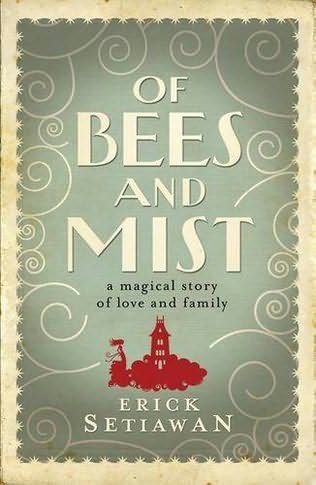 ‘Of Bees and Mist’, Eric Setiawan, Hodder Review 2009
Imagine if your actions had supernatural consequences. Imagine the little fib you told or the gossip you participated in manifested itself in a metaphysical way in your life somehow…it’s a thrilling thought and it’s one way to explain the fiction genre of ‘magic-realism’ into which category Eric Setiawan’s abundant debut novel ‘Of Bee’s and Mist’ falls. This is an epic story of three generations of women. The youngest of whom, Meridia is the central character and what a formidable lead character she is. Her parents are locked in what appears to be a loveless marriage and as a result of this, dark supernatural occurrences take over their daily lives. There are ghosts in the mirrors, curses from fortune tellers cause mayhem, a blue mist descends upon the home physically repelling anyone it chooses from the door, Meridia is visited in her dreams by prophecies and EVERYONE is keeping secrets. Removing the alchemy from this book the story would stand up by itself. There are births, deaths, marriages, new businesses started, old friends lost & found and warring mother in laws. Eric Setiawan has a degree in psychology and is masterful in this novel at depicting the tensions and manipulations that can occur within family units. His imagination is a force in itself fusing unearthly occurrences with daily routines. When life runs smoothly for these families flowers bloom out of season, the sun shines in winter, children become complacent and doting but when the families are feuding with each other swarms of invisible bees thwart them, fortunes are lost, personalities change, people grow hooves in place of feet and others are encased in blocks of ice! This book brought back to my mind Isabelle Allende’s wonderful novel ‘The House of the Spirits’ . I recommend it highly. Eric Setiawan is firmly on my one to watch list.
Haiku; Invisible bees, over three generations, thwart daily lives
Cometh the hour…cometh the man
February 16, 2010 at 8:53 pm | Posted in Biography, Great for Book Clubs | 1 Comment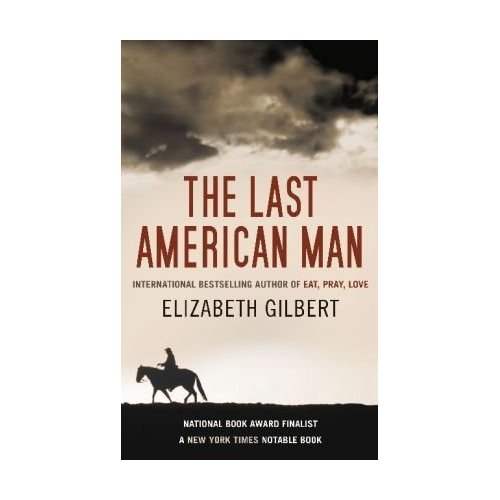 Elizabeth Gilbert, ‘Last American Man’, Penguin 2002
Who is your hero? I thought I knew the answer to this question before I read Elizabeth Gilbert’s ‘Last American Man’. This story is pure inspiration. It is the bountiful biography of a man called Eustace Conway who hails from a typical middle class background in America but after turning seventeen leaves polite society and his comfortable suburban home behind to begin living off the land in the Appalachian Mountains. Amidst the array of celebrity heroes America produces Eustace Conway really is an unsung hero. Eustace hikes two thousand miles down the Appalachian Trail and rides horseback across America all in an attempt to live a more fulfilled life away from the materialism of the society he left. Word soon spreads about Eustace and he becomes a high profile figure in America with Time Magazine doing an article on him. He is an enigmatic character to whom people flock. He is charismatic and falls in love about twenty times in the duration of the book. His upbringing was tumultuous and his personality is enigmatic. It sounds like a heavy going story but it’s not at all because of the author Elizabeth Gilbert. Gilbert’s two other books, ‘Eat, Pray, Love’ and ‘Committed’, are bursting with humanity, psychology, honesty and humor. She applies all of these qualities to Eustace’s biography so you understand the decisions he makes and feel the humanity in his mistakes and triumphs. Fans of John Krakauer’s ‘Into the Wild’ will love this. Anyone who loves human interest stories will also love this. Still to this day Eustace lives off the land in North Carolina on a nature reserve he built. Read it to be moved and intrigued.
Haiku; Handsome naturalist, will make you want to leave town, and live off the land
Welcome Gil Adamson!
February 8, 2010 at 6:52 pm | Posted in Great for Book Clubs, Middle Weight Fiction | 4 Comments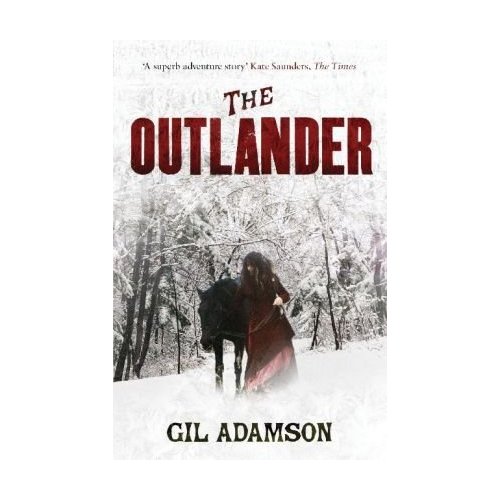 Gil Adamson, ‘The Outlander’, Bloomsbury 2009
Do you find sometimes you read the same kind of book? Do you like me sometimes get stuck in a rut with what you read? Are you looking for something out of the ordinary but still a captivatingly good page turner?? Then ‘The Outlander’ is for you! This book is nothing like I have read before. The author, Gil Adamson, is a Toronto based poet whose profession lends itself majestically to this fantastic story. It’s 1903 and the heroine of the novel, Mary, is a young widow who is being hunted through the prairies and Rocky Mountains of Canada. The plot is so simple and hinges on two important facts; 1. She is widowed by her own hand and 2. She is being hunted by her late husband’s brothers. Adamson describes the wilderness, the cold, the hunger and the isolation Mary endures so eloquently you feel as if you are experiencing it yourself. It’s also a super psychological portrait of a woman suffering postpartum psychosis. Reading it broadly it comments on people who live outside society, those who are illiterate, different and out of their time. Reading it literally it comments on the resourcefulness of women, mental health and how sometimes marriages can be very unhappy. It’s got a lot to offer a discerning reader. Adamson’s writing has been likened to that of Cormac McCarthys and I can see why. It’s dark, thrilling and psychological but it’s also lyrical and emotive. If you never make it to the Rockies or rural outback of Canada in your lifetime ‘The Outlander’ will take you there instead.
Haiku; Toronto poet, writes a galloping story, that never slows down
Blog at WordPress.com.
Entries and comments feeds.
 Sarah's Books