To celebrate Sarahs-Books 1st anniversary we are sharing WordPress’s assesment of our first year blogging – here is 2010 in review
February 17, 2011 at 4:48 pm | Posted in Uncategorized | Leave a commentThe stats helper monkeys at WordPress.com mulled over how this blog did in 2010, and here’s a high level summary of its overall blog health:

The Blog-Health-o-Meter™ reads Fresher than ever.
Crunchy numbers

A Boeing 747-400 passenger jet can hold 416 passengers. This blog was viewed about 2,500 times in 2010. That’s about 6 full 747s.
In 2010, there were 26 new posts, not bad for the first year! There were 36 pictures uploaded, taking up a total of 2mb. That’s about 3 pictures per month.
The busiest day of the year was February 5th with 91 views. The most popular post that day was About.
Where did they come from?
The top referring sites in 2010 were WordPress Dashboard, fishinginbeirut.com, twitter.com, facebook.com, and dlrlibraries.blogspot.com.
Some visitors came searching, mostly for christmas book, “socks on her hands”, sarah’s books, christmas reading, and skippy dies.
Attractions in 2010
These are the posts and pages that got the most views in 2010.
About January 2010
8 comments
Is romantic Ireland dead and gone?..not with the click of your mouse March 2010
5 comments
Christmas reading December 2010
Welcome Gil Adamson! February 2010
4 comments
Where isolation is beautiful and death delivers transparency….. August 2010
1 comment
What to look for in a memoir…
February 4, 2011 at 4:33 pm | Posted in Biography | 1 CommentTags: Book Reviews, Books, Great Reads, Memoirs
I would as a reader generally shy away from reading memoirs and biographies as often even the most interesting stories are so heavily grounded in narrative they become disengaging. Candia McWilliams memoir ‘What to Look for in Winter’ is movingly different. She sets the narrative of her suffering at the loss of her sight against the often tragic but beguiling story  of her life producing a well paced and plotted memoir.
McWilliams was judging the Booker Prize in 2006 when she first began to lose her sight and when we meet her in the book she is Cambridge educated, part of the English aristocracy has been married twice once to an Earl and emerged out of these relationships with three children and a wicked drinking problem.
I believe in person there is an other worldliness quality about McWilliams and a striking beauty , the same can be said about her writing. Her memoir has a detached tone when describing her experiences which mirrors McWilliams own withdrawal from the world. Throughout her life she gains and loses many things; husbands, homes, health, self respect….she probes each experience with her beautiful literary eye pulling together the sense of her life with the aid of a Cambridge inspired vocabulary.Her strong sense of self is paraded out through confident prose and language, meaning becomes jewelled in language. In one particularly beautiful scene McWilliams daughter asks here why she likes the royal family and her explanation encapsulates the ideology of the royal family with a very clever perspective.
Her experiences at times are physical (the loss and re-gain of her sight, horrific battles with alcohol), at times they are heavily emotional self-destructive, ugly, romantic, poignant but the eye with which McWilliams looks at her own life with is so probing that all these experiences and battles with herself are beautiful because they are self aw are.
are.
It is with deep self-awareness this memoir is written and that’s what sets it apart from the others. That and the extraordinary life McWilliams has so far led. One reviewer of McWilliams describes her like ‘a northern princess gazing out of a cold castle onto icicles and pale eyed wolves’ and this is truly apt.
Haiku: Candia’s language, shiny diamonds in the dark, luminescent life.
Mr Chartwell is dark and deep….
January 11, 2011 at 8:47 pm | Posted in Award Nominated, Great for Book Clubs, Literary Fiction | 1 CommentTags: book review, bookclub, new author
Rebecca Hunt ‘Mr Chartwell’ Penguin Fig Tree, Oct 2010
‘…Churchill wasn’t alone in his bedroom; something else in the dark, a mute bulk in the corner, a massive thing, was watching him with tortured concentration….”you’ve been waiting for me,” said the heartless voice “I could hear you waiting”‘.
Debutant author Rebecca Hunt has imagined a novel as novels should be imagined on a huge emotional scale and conceived by an idea that truly inspired her. 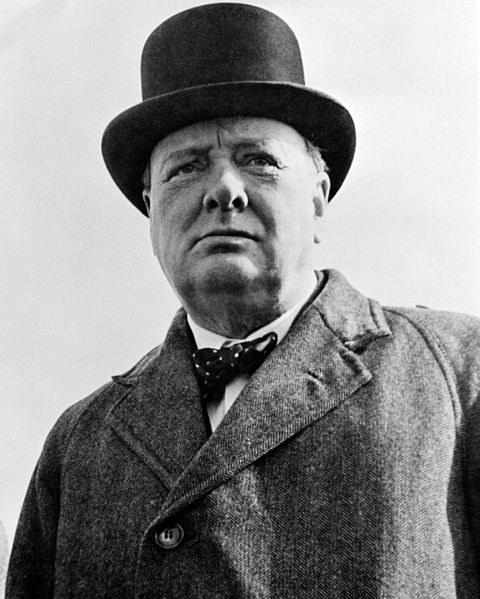
It is a fictional account of Winston Churchill in 1964 who is on the cusp of retiring from his long political career as a Statesman and having lead Britain through the Second World War as Prime Minister. Churchill suffered all his life with depression which he famously referred to as his ‘black dog’.
In this novel Churchill’s depression becomes an anthropomorphic animal. Rebecca Hunt conceives of this black dog as a living breathing revolting creature who walks on its hind legs and talks with seductive passive aggressive cruelty humanized by the name Mr Chartwell. Mr Chartwell takes up residence with the novels other principal character Esther Hammerhans, a quiet Library Clerk whose life becomes intertwined with Churchill’s on the arrival of her new lodger.
This novel is utterly original and tenderly written. Never has such bleak subject matter been elevated to these tactile and poignant heights through writing style in  my opinion. I have struggled to find another literary example where an author has conceptualized such a metaphorical state as well as Rebecca Hunt.
Interestingly Winston Churchill remains the only British Prime Minister who has received the Nobel Prize in Literature. For someone who took refuge in the arts from his depression I’m sure Winston Churchill would have approved of this work of fiction.
Haiku; A dark ugly thing, is often mezmerizing, let the black dog in.
Click here to view this book on Penguin Books
* Mr Chartwell was the longlisted for the Guardian First Book Award 2010
Christmas reading
December 9, 2010 at 4:32 pm | Posted in Christmas 2010 Recommendations | Leave a commentDear reader,
To celebrate Christmas sarahsbooks.com is posting it’s top poetry, fiction and short story authors and books of 2010 and we invite you to share your list with us too by emailing sarahreccommends@gmail.com which we will post or by leaving a comment on the blog.
 If you are at a loss of what book to buy for a
book lover read over our list of top ten authors whose back catalogues combined cover a rainbow of genres from historical to magic realism and from the polemic to romantic but all showcasing the finest literary techniques and above all that magical eye authors have for plots, stories, ideas and prose that move readers.
Best Poetry of 2010
1. Paul Durcan ‘Life is a Dream’
2. Seamus Heaney ‘Human Chain’
3. Lawerence Sail ‘Songs of the Darkness Poems for Christmas’ (Lawerence has combined every poem he wrote at Christmas over the years)
4. Edmund de Waall ‘The Hare With Amber Eyes: A hidden Inheritance’
Best Literary Fiction 2010
1. Sebastian Barry ‘The Secret Scripture’
2. Steven Callaghan ‘Fishing in Beirut’
3. Paul Murray ‘Skippy Dies’
4. Don Delillo ‘Point Omega’
5. Damon Galgut ‘In A Strange Room’
6. Jaspreet Singh ‘Chef’
7. Ian McEwan ‘Solar’
Best stories 2010
1. Gill Adamson ‘The Outlander’
2. Jennifer Johnson ‘Truth or Fiction’
3. Curtis Sittenfeld ‘American Wife’
4. Anne Tyler ‘Noah’s Compass’
5. Walter Mosley ‘The Last Days of Ptolemy Grey’
Sarahs.books.com top ten authors for avid and discerning fiction readers
1. Walter Mosley
2. Damon Galgut
3. Rose Tremain
4. Maile Meloy & Kevin Barry (for short stories)
5. Claire Kilroy (one to watch for the future)
6. Joan Didion
7. Augusten Burroughs
8. Claire Messud (only author to write a truly successful 911 novel in sarahs.books.com’s opinion)
9. Don Delillo
10. Steven Callaghan (only current Irish author daring to set their books abroad)
One story too many narrators
December 2, 2010 at 4:09 pm | Posted in Great for Book Clubs, Literary Fiction | Leave a commentRose Tremain ‘Trespass’ Chatto & Windus, August 2010
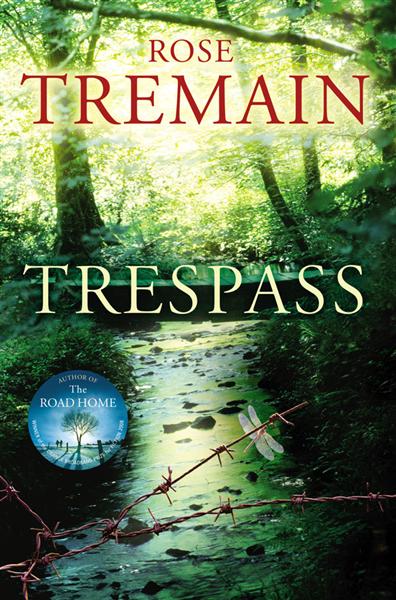 Rose Tremain’s literature is a beacon of great writing and she herself is an ambassador of the literary world. A teacher of creative english who graduated from the Sorbonne she counts among her influences Gabriel Garcia Marquez and William Golding and is enamoured with the modern magic realism style of writing. She has judged the Booker twice and was an Orange Prize winner for fiction in 2008.
She is predominantly an historical fiction writer and it is to her credit that all of her works are completely different in style, tone and mood. Her 2003 novel ‘The Colour’ which tells the story of two young newlyweds emigrating to New Zealand and getting swept up in the gold rush of the 1860’s, is one of the most moving and well executed novels I have ever read.
In ‘Trespass’ Tremain’s latest offering we encounter Aramon, a brute of a man and a rapidly descending alcoholic who lives among the hills of Cevennes in southern France, in the time of his life when he is desperate to sell his majestic but dilapidated home to a foreigner to use as a second home. His sister Audrun lives beside him in a small modern bungalow. In a neighbouring area two women live together, Kitty a watercolourist and Veronica a successful garden designer to whom Veronica’s brother Anthony Verey comes to visit from London. Anthony is a celebrated and rich Antiques dealer who decides to spend his retirement in the south of France to be near his sister, and begins a search for his perfect home with life-altering consequences.
Tremain explores the idea of trespass on many levels in this novel. The trespassing of the English tourist into the gentile way of life in southern France through the polemic rants of the local mayor, the intrusion of Anthony on his sisters way of life, the intrusion of Audrun’s little bungalow on Aramon’s life and the trespass that occurs when social boundaries are broken. These dichotomy’s in this book don’t work. Why? Although Tremain’s writing is compelling the sense of the story is lost as there are too many narrators and too many large ideas introduced throughout the novel that require more space to be developed. This disparity of many individual stories causes a lack of overall connection between the cast of characters and after the halfway mark the book’s chemistry fizzles out and it degenerates into a who-dunnit game.
The character of Kitty is the most intriguing and real of all the characters portrayed however she is a minor player in this story who becomes relegated with time and disinterest from many parties. Tremain attempts to say something original with this work but I feel it should have been either scaled back into a novella or scaled up into a roaring epic of a novel where the characters come to know themselves much better and have a more natural atonement by the novels end.
‘Trespass’ was longlisted for this years Booker Prize. It is a good read, it has villans and innocents and Tremain’s writing as always is evocative and laced with sensitivity for her characters and settings. The characters own human failings cleverly bring about their own personal demise but the story is too heavily plotted and full for the characters to survive it. They become victims of their battered around by the plot and fail to interweave in meaningful ways.
Tremain beautifully depicts the Mistral that blows and carries a cathartic fire through the Cevannes at a point in the novel unfortunately it seems to have taken the heart of the book with it too.
Haiku; In France’s valleys, families wage quiet war, Rose Tremain observes.
Get caught in Picoult’s web…
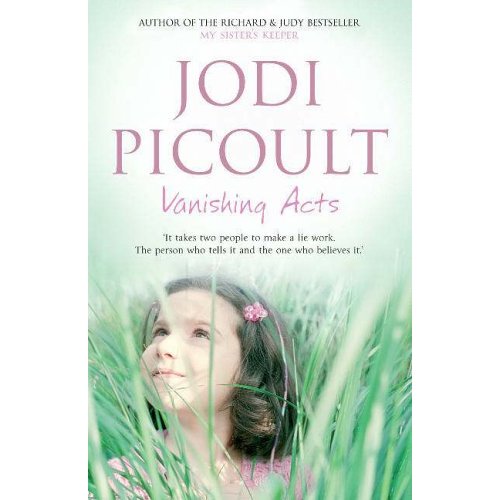
November 29, 2010 at 1:19 pm | Posted in Middle Weight Fiction | Leave a commentJodi Picoult ‘Vanishing Acts’ Rearsby, Clipper, 2006
(x14 CDs, 15hr 30min)
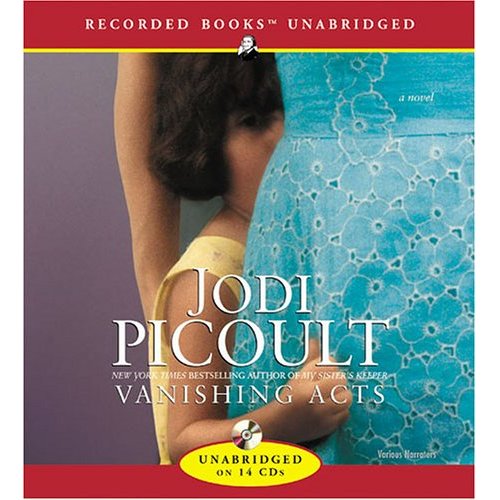
Jodi Picoult is fantastic. She is an author who knows the craft of storytelling instinctively and is a mistress of suspense. She is also an interesting person in her own right. She studied creative writing at Princeton and has a Masters in Education from Harvard and it wasn’t until she was pregnant with her first child that she wrote her first novel in 1992. For such a young author (she is forty-three) her world view is impressively broad and sensitive.
The seventeen works of fiction she has already produced are impressive psychological explorations of dark occurences in ordinary people’s lives. Her ordinary characters deal with these extraordinary circumstances with deeply interesting psychological and moral perspectives that have spun many readers into a captivating web.
Jodi Picoult’s ‘Vanishing Acts’ is wonderful to listen to on CD. Delia Hopkins, the central character, is a young woman preparing for her wedding who is a committed and successful missing persons investigator . Picoult has her leading lady living in New Hampshire where she is close to her father who has raised her since her mother’s death when she was four years old and is a loving mother to her young daughter Sophie.
You will like her…no reader wouldn’t that is maybe why when the County Police come to arrest her father one day for the kidnapping of a young girl called you feel her shock as strongly as she feels it…..
Picoult will not win any awards for her literary writing. Although this sounds unkind it is just one way to measure a work of fiction. What she excels in is showing a story so compellingly crafted and human it commands million of fans and you can’t argue with that.
This story is so enthralling that while listening to it in my car I would fumble to change the CD’s to the detriment of my driving. Get caught up in Picoult’s web and I’ll meet you there!
Haiku; No one ever knows, the secrets a small town holds, holding out for love.
Click here to view this CD on DLR Library Catalogue
Click here to read book club discussion questions for Vanishing Acts.
‘….lyrical beauty and ethical depth….’
November 2, 2010 at 1:43 pm | Posted in Great for Book Clubs, Middle Weight Fiction | Leave a commentTags: Book Reviews
In 1995 Seamus H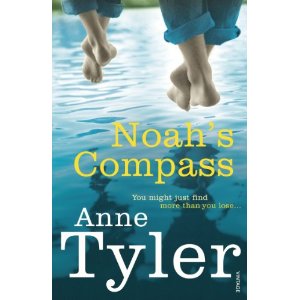 eaney won the Nobel Prize in Literature “for works of lyrical beauty and ethical depth, which exalt everyday miracles and the living past”. I suddenly remembered this when thinking of ways of describing Anne Tyler’s fiction. Anne’s fiction similarly addresses everyday issues and occurences in the course of her characters lives. Far from being mundane her work addresses the mystic nature of these occurences and the complex and rich emotional situations that compliment them.
Anne is as unassuming as her prose which many reviews of her lately are claiming is responsible for her being lesser known than her contemporaries like John Updike. She has been nominated for the Pulitzer prize twice and has won it once in 1989 for her novel ‘Breathing Lessons’ but the media shy American author from Baltimore hasn’t done a book tour nor given a face to face interview since 1977.
Anne Tyler eighteenth novel ‘Noah’s Compass’ is receiving rave reviews. It is not fair of me to ask what is ‘Noah’s Compass’ about it is much more purposeful to ask what does it address. Other authors write books about the same things as Anne but Anne’s skills as an author explore these ideas in an ethical and deep way using minimal but deftly executed prose. The cover of this book I feel is inappropriate as it suggest a pretty light yarn which is not what she delivers.
‘Noah’s Compass’ addresses the problem of memory loss in older age through the story of Liam Pennywell a sixty year old man who has just lost his teaching post and through an unfortunate incident faces down the onset of memory loss. His life is an ordered and minimalist one. Widowed once and divorced once Liam lives a sparse and often detached life at stages. The distress of his sudden memory loss colours his relations with his family and his outlook on life. He is a man with very little to lose and very little he is able to achieve. Anne’s writing skills explore this intimately and you learn how appropriate the title of the book becomes when you encounter it’s use in the story.
A very fine piece of writing in a very fine body of work from an unsung hero of fiction.
Haiku; A light lit cover, in stark contrast with deftly, executed prose
The prose road is the road less travelled
October 8, 2010 at 2:42 pm | Posted in Award winners, Great for Book Clubs, Literary Fiction | Leave a commentTags: Book Reviews
Howard Jacobson ‘The Finkler Question’ Bloomsbury August 2010
Howard Jacobson’s ‘The Finkler Question’ has won this year’s Man Booker Prize. However reading it didn’t change my decision to have firmly backed Damon Galgut’s ‘In a Strange Room’ for the prize although the two books are very different types of novels. What is likeable about ‘The Finkler Question’ is that it is a very dark comedy, something which is so rare in fiction and it is also a remarkable piece of prose writing whose plot allows Jacobson to explore many interesting ideas.
The book hinges itself on the dynamics of Sam Finkler’s friendships with tw o other men, Julian Tresolve a former BBC worker whose life and career appear to have suffered from his disgruntled world views and values and his inability to commit to people and long term projects and also with Libor Secivk an elderly Jewish widower. Finkler himself is a philosopher and television producer and philosophical musings are resonant in Jacobson’s writing style.
One evening Tresolve is attacked and his pride and values are disturbed when he realises 1. his attacker is a woman and 2. when he believes she slurred the words ‘you Jew’ when robbing him of his valuables. The novel then begins to meditate on ideas of anti Semitism and the Israeli – Palestine conflict with his friend Libor taking over the narrative for a large part of the book musing what it has been like for him to be Jewish in the21st Century.
I must be honest and say I found this book to be quite difficult. The prose road in fiction for me is definitely the one less travelled in my reading. The novel’s concepts are very interesting but heavily ideological, Jacobson’s writing voice is strong but heavily philosophical and these elements compounded together to make the novel more challenging than enjoyable.
Haiuk; Ideology, heavy literary prose, study the story.
A wonderful thinly veiled disguise…….
September 23, 2010 at 1:10 pm | Posted in Great for Book Clubs, Middle Weight Fiction | Leave a commentTags: Book Clubs, Book Reviews
Curtis Sittenfeld, ‘An American Wife’ Random House, August 2009.
This is the b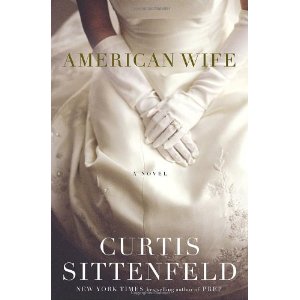 est page turner I have read in a very long time. At a whopping 558 pages Curtis Sittenfeld’s novel ‘American Wife’ is a monster of a story but one that is so enthralling it will have you turning the page every few minutes. ‘American Wife’ is the fictionalized account of the life of Laura Bush and it seems to be a thinly veiled disguise at that. How this novel made it out of the legal deparment of Random House I have no idea…..
The narrative is carried along by some very important life markers in the leading lady’s youth which I will not spoil by revealing. They are used to perfection in the narrative dynamic as the book progresses over it’s almost 600 pages. A technique some modern literary authors could take note of. ..
‘Alice Blackwell’, the novels leading lady, grows up in a middle class family who are highly moral, well educated, family orientated and good people who are somewhat conservative in their take on life. Alice is the most likeable character full of grace and dignity in her conduct. She trains as a librarian, as we know Laua Bush did, and is liberal and open minded so much so she was a democrat somthinga lot of us did not know.
How does she come to marry her husband the most nortorious Republican of all time? Well this is a romantic love story above all and one that also respects the institution of marriage as something that requires commitment and work. An examination of a private and public life lived simultaneously ‘American Wife’ is a fantastic epic yarn.
Haiku; Behind Presidents, often stand quiet women, step foreward Laura Bush.
The Good Author
September 1, 2010 at 12:49 pm | Posted in Award Nominated, Great for Book Clubs, Literary Fiction | 1 CommentDamon Galgut ‘In A Strange Room’ Atlantic Books April 2010
‘In a strange room you must empty yourself for sleep. And before you are emptied for sleep, what are you. And when you are emptied for sleep, you are not. And when you are filled with sleep, you never were.’ The title of this novel and quotation are Damon Gal guts nod to William Faulkner. This is a greatly admirable story for its literary skill and for the story’s ability to drive your thoughts while you read it.
Its’ literary skills alone address the ideas of memory, fiction, trave l and self identity. The novel is broken down into three parts called The Follower, The Lover and The Guardian which interestingly have been published as separate stories already in the Paris Review. The lead character is a young man travelling who experiences many profound encounters with fellow travellers on the road affecting him until he returns home a changed man. In The Follower he meets Reiner with whom he travels and hikes across Greece. In The Lover a relationship flourishes in Africa but is neither physically nor emotionally consummated and in The Guardian Damon travels through India with a mentally ill friend under very difficult circumstances.
This novel is brimming with intensity, ideas of home and travel and one man’s relationship with his own peace of mind and at times the consequences of reaching the limits of this peace. I can liken it to a very interesting person articulately expressing the effects other people are having on them, the constraints of lust and love in their life along with their values of home and travelling. It uses the first person slipping into the third person narrative naturally which separates this from a memoir into a work of fiction, exemplifying the idea that memory is no more than fiction.
I think Damon Galgut is a very interesting author, I think he expresses human encounters very acutely and I think he is distinguished because of his command of literary skill. This is a compelling read and has earned a well deserved place on the short list for the Booker Prize. This novel can’t be put into a box but I would exalt it for Galgut’s writing style. It is an intense read that sa ys so much so simply and it has inspired me to re-read Galgut’s earlier novel ‘The Good Doctor’ (Atlantic books June 2004) I highly recommend it.
Haiku; Memoir or fiction, how to tell the difference? through writing technique.
Blog at WordPress.com.
Entries and comments feeds.
 Sarah's Books